
Searching for a Warrant in Cottonwood County
Work the county's own list first, then pull the court record. Cottonwood County's sheriff posts a Warrant List that is free and public, linked straight from the department page. No other page in the county exists just to show warrants. It runs thin, though. Treat it as a first pass, not a final answer, because the fuller record sits with the court. Before you open anything, gather the identifiers: full legal name, date of birth, and a court file or citation number if you have one. That number matters most of all. It moves your Cottonwood County search off a name guess and onto one exact case.
- Read the sheriff's Warrant List and compare on name plus date of birth.
- Open Minnesota Court Records Online and run a name search with Cottonwood selected.
- Switch to the Citation Number tab for traffic matters and search the number printed on the ticket.
- Call Cottonwood Court Administration at (507) 831-7003 or the sheriff at (507) 831-1375 when the online result is ambiguous.
- Use the courthouse public terminals for the most complete electronic view, then consult an attorney before acting.
Why the Cottonwood Warrant Page Has No Search Box
Plenty of counties offer a lookup form with typed fields and a submit button. Cottonwood County takes a different route. The sheriff's warrant page is a single static table you read yourself, with no filter, no sort and no name field anywhere. The sheriff posts no refresh schedule either. So two gaps remain. A common name cannot be narrowed inside the tool, which leaves the date of birth column to do that work. And a row could be hours old or weeks old with no way to tell. Use the table as a lead only. In Cottonwood County, the court docket is the record that controls.
Warrant Search Fields Explained
The fields worth learning belong to the state case system, not the sheriff's page in Cottonwood County. Minnesota Court Records Online offers four search tabs plus a set of filters. Picking the right control saves real time on common names.
| Field Label | Type | Required | Notes |
|---|---|---|---|
| Name | Search tab | No | Last, first and middle name boxes. Exact name or "sounds like"; a trailing wildcard works in exact mode after two characters. |
| Case Number | Search tab | No | The cleanest route. Cottonwood criminal files follow the district court numbering used statewide. |
| Citation Number | Search tab | No | The traffic route. Pending traffic cases often skip a name search entirely. |
| Date of Birth | Date | No | Exact date or a range in MM/DD/YYYY form; the main filter against same-name results. |
| Case Category | Checkboxes | No | Civil, Criminal, Family, Probate or Mental Health. |
Searching by Citation Number in Cottonwood Cases
The citation tab is the system's most underused control. A traffic citation filed in Cottonwood County may not show up under a defendant name search while the case is pending, even though a warrant can still issue on it later. The citation number is the handle that works. Look for it on the paper ticket, a court notice or a payment reminder. Lost the ticket? Court Administration can find the case by name, date and location. Keep that citation number for every later call.
What a Warrant Search Shows
A hit in the court system returns a case, not a verdict. What you see is the docket: filings, scheduled dates and entries recording what the court did in Cottonwood County. A warrant shows up as an entry, with a recall or a new date beside it later. Read the newest entries first.
| Case or File Number | The identifier for the case, for example 2025-CR-000123 in district court criminal files. |
|---|---|
| Charge or Offense | The offense text as filed, which may differ from what a person was told at the stop. |
| Issuing Court | Cottonwood County District Court in the Fifth Judicial District. |
| Warrant Entry | The docket line showing a warrant, an application for one, or a recall. |
| Release or Bond Terms | Conditions, bail amounts or a no-bond notation, when the court set them. |
| Status | Active, served, recalled or quashed, as reflected on the docket. |
Warrant numbers never appear on the sheriff's list. Any number you need for a Cottonwood County court or an attorney has to come from the case file itself.
Cottonwood Warrant Search Gaps and Delays
A blank search can mean several things. Pending criminal, traffic and petty misdemeanor cases may not return by defendant name at all. Protected case types, including juvenile, domestic abuse, harassment and civil commitment files, stay out of remote access entirely. Same names, aliases and spelling variants push the problem the other way with false hits. The system says plainly that it is not the official record, so a result is not a warrant determination on its own. Certified copies come from Court Administration in Cottonwood County, and the courthouse terminals hold more than remote access does.
Where to Check Warrants in Cottonwood County
Each office here holds one piece. The sheriff publishes the operational list and answers service questions. Cottonwood County Court Administration keeps the case file, calendar and copy counter. The state court system holds the searchable docket. The jail handles custody, not warrants. Minnesota runs no public statewide active-warrant lookup, so a complete Cottonwood County check means the sheriff's list, the state case record and, for some matters, the federal court system.
Federal charges live in a separate system entirely. The District of Minnesota publishes its case interface through PACER, and a federal warrant will not appear on the Cottonwood County list or in the state case system. 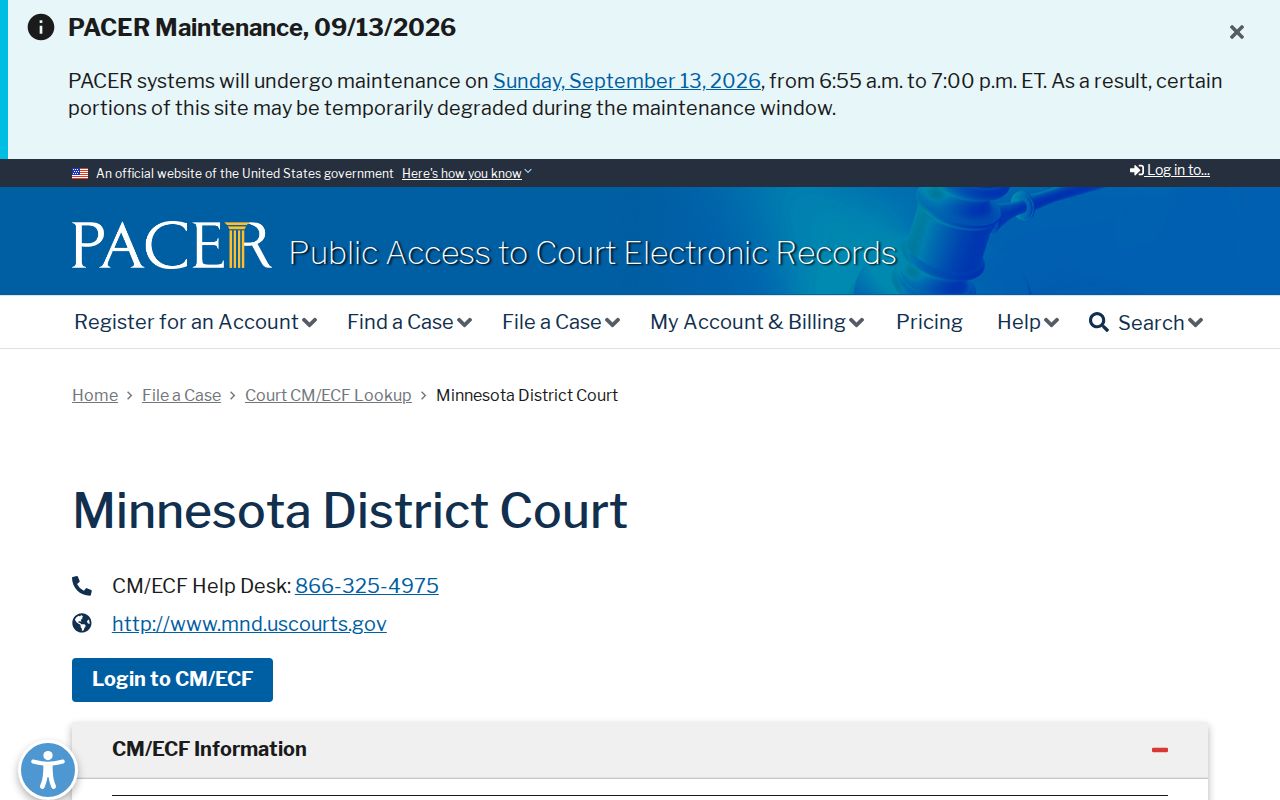 A separate federal search is the only way to cover that layer.
Cottonwood Court Administration Warrant Checks
Court Administration at the Windom courthouse is the confirmation counter when the online record falls short. The office sits at 900 Third Avenue, answers at (507) 831-7003, and keeps weekday hours from 8:00 a.m. to 4:30 p.m. Staff can locate a case by name or file number. They will explain the next hearing date and take a copy request. What they cannot do is give legal advice or tell you what a Cottonwood County warrant means for your situation. Questions about appearing, what to say or how to structure a resolution belong with an attorney.
Restricted Warrants and Access Rules
Minnesota treats its warrant index with care. Under Minn. Stat. § 13.82, the index stays confidential until the person is taken into custody, served or appears in court, unless the agency finds a public purpose is served. Arrest data can be public. That is why a Cottonwood County list can show a warrant while a records desk declines to discuss the details behind it.
Key Rules:
Sealed and juvenile warrants miss every public search, and Minn. Stat. § 260B.171 keeps juvenile records out of public view except by statute or court order.
Data requests run through Minn. Stat. § 13.03, which allows free inspection and caps black-and-white copies at 25 cents a page for requests of 100 pages or fewer.
A blank search is not proof, because a warrant may be unserved, held by another court or shielded by an access rule.
Federal Warrants Outside Cottonwood Searches
Cottonwood County belongs to the U.S. District Court for the District of Minnesota. Its courtrooms sit in Minneapolis, St. Paul, Duluth and Fergus Falls. Windom has no federal courtroom, and the county sheriff holds no federal warrant files. A state warrant search simply cannot reach federal process.
Federal courthouse locations and clerk contacts are published at mnd.uscourts.gov. 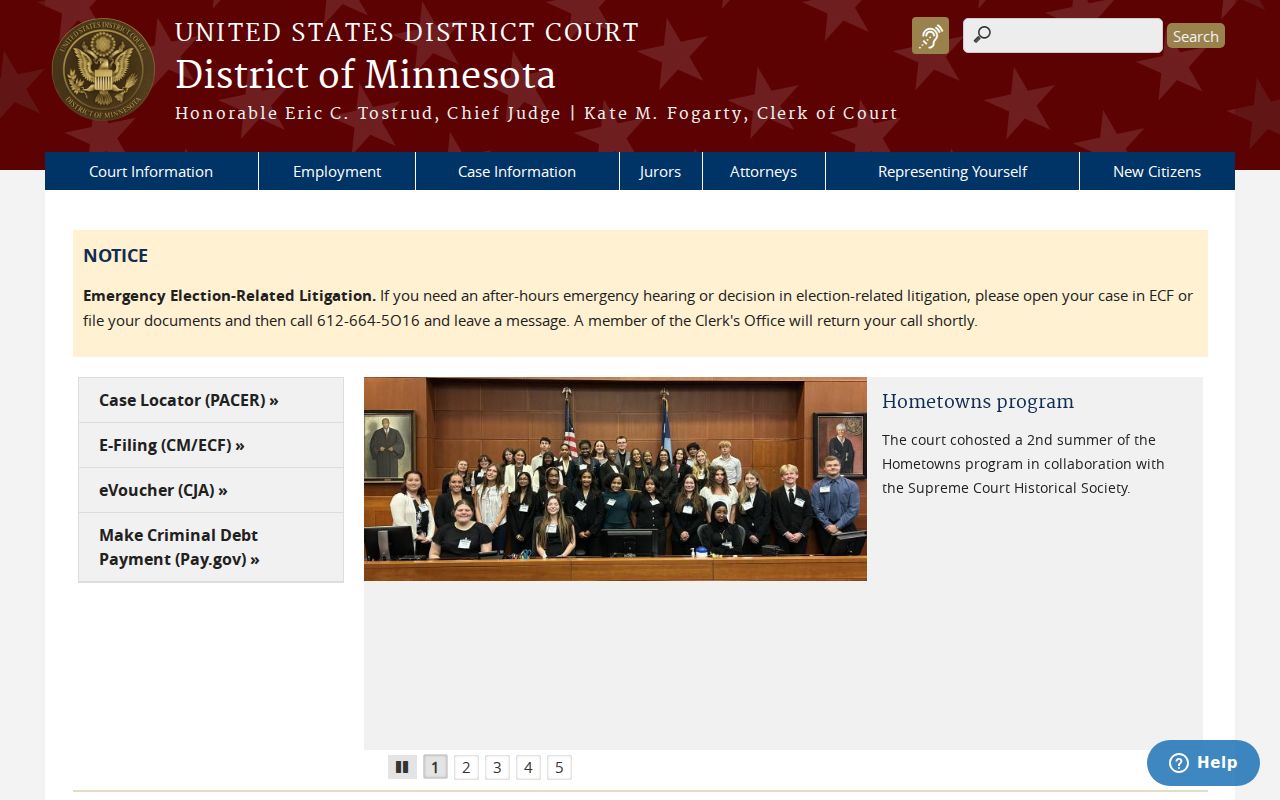 The U.S. Marshals Service serves federal process here and lists Cottonwood among the counties it covers, without publishing a local roster. For a federal matter, the federal clerk or an attorney is the right first call.