
Cottonwood County Arrest Warrants Explained
An arrest warrant is a court order, not an overdue ticket. It authorizes taking someone into custody on a charge. The legal footing is probable cause, meaning facts and circumstances that support the conclusion an offense happened and this person committed it. A judge or judicial officer reviews that basis before signing. Charges can arrive by complaint, indictment, probation violation or another court process. Minnesota law supplies the arrest authority in Minn. Stat. § 629.30. The rules for restraint and notice sit in Minn. Stat. § 629.32. In Cottonwood County, the issuing court is the district court at Windom.
Cottonwood Probable Cause and the Warrant Affidavit
The paperwork behind an arrest warrant usually starts as a law-enforcement affidavit attached to a charging document. It lays out what the officer knows. It explains how the officer knows it. Then it argues why those facts add up to probable cause. The judge reads the affidavit and decides whether the threshold is met. Minnesota's Form 8 shows the same architecture: the court and county, the parties, the file number, the charging basis, the probable-cause source, the offense, the officer directed to execute the warrant, the release conditions and the return fields. A Cottonwood County warrant built on a new charge follows that shape, with a complaint or indictment underneath it.
Note: the affidavit may be sealed or restricted while an investigation is open, which is one reason a records desk cannot always discuss a case.
Inside a Cottonwood County Arrest Warrant
The warrant document itself identifies the case, the person and the terms of release. Most of those fields never reach the sheriff's public list. That is exactly why the Cottonwood County court file, not the list, answers practical questions.
| Court File Number | Assigned when the charging document is filed, for example 2025-CR-000123. |
|---|---|
| Named Subject | The person the warrant authorizes officers to take into custody. |
| Charge and Level | The offense as charged, with its Minnesota offense level. |
| Issuing Judge or Court | The judicial officer who signed the order, in Cottonwood County District Court. |
| Bail and Release Conditions | Any bail amount, conditions of release or no-bond notation set by the court. |
| Date Issued | When the order was signed, which also dates the case posture. |
| Return Information | What happens when the warrant is executed, including custody and booking details. |
Why the Cottonwood Warrant List Is Not the Warrant
The sheriff's public list shows four fields: name, date of birth, level and offense. That is all. An arrest warrant itself carries the file number, the judge, the charge level, the bail and the conditions, so reading the list and assuming you know the rest is the most common mistake people make here. The list also has no status column. A warrant that was served at booking, recalled by the judge or quashed can sit on the page until staff update it, and no published schedule governs when that happens. For a warrant's current posture, the court docket is the record that shows it.
Note: use the list to learn that something exists, then use the court file to learn what it means.
Serving Arrest Warrants in Cottonwood County
The Cottonwood County Sheriff is the county's operational agency, running the jail and dispatch. The office also handles civil process. City departments in Windom, Mountain Lake and Westbrook employ officers who can execute warrants under state law, and Windom notes that its dispatch comes from the county sheriff. Service can happen almost anywhere. It might come at a residence, during a traffic stop, or while a person is somewhere on unrelated business. An arrest is followed by booking. On a serious charge, an initial appearance follows, where a judge addresses counsel, release conditions and bail. Federal warrants are separate and never appear on a county list.
Cottonwood Arrest Warrant Notice and Restraint
Minnesota sets rules for how an arrest on a warrant must unfold. The officer uses no more restraint than the situation requires. The person is told the arrest is made under a warrant. The warrant itself gets shown on request, as soon as practical. Those obligations come from Minn. Stat. § 629.32. The statute also covers notice between agencies, so an officer holding someone can learn another jurisdiction wants them. The practical point is simple. A warrant should exist as a document, and a person arrested in Cottonwood County is entitled to know a warrant is the reason.
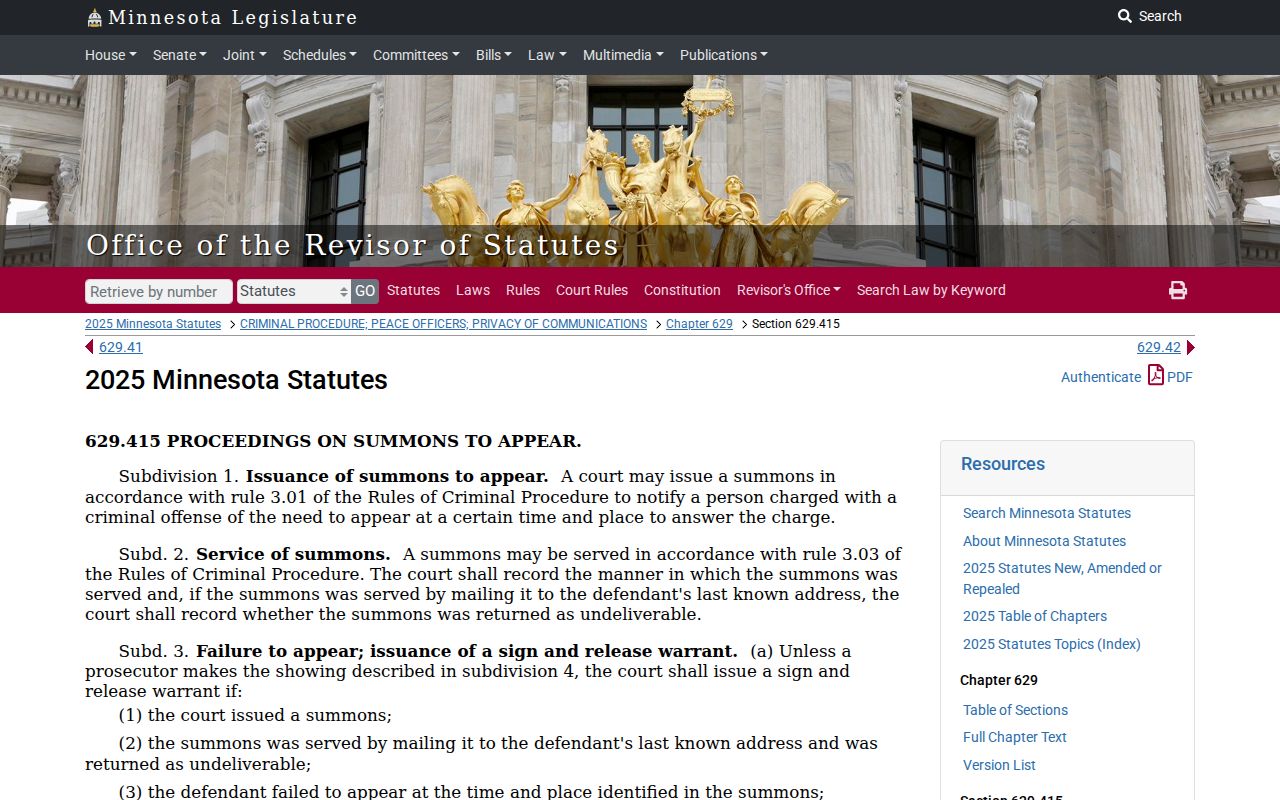 The qualifying first-failure-to-appear process in Minn. Stat. § 629.415 works the other way: that warrant exists but does not authorize an arrest, and an officer who contacts the person takes an updated address and gives a new court date instead.
Comparing Arrest, Summons, and Bench Warrants
Three instruments, three different responses. A summons orders a person to appear and assumes they will. An arrest warrant authorizes custody. A bench warrant grows out of an existing case after a missed obligation, and knowing which one you face in Cottonwood County decides whether a phone call is enough or counsel is essential.
| Feature | Arrest Warrant | Summons | Bench Warrant |
|---|---|---|---|
| What it orders | An arrest | An appearance on a set date | An arrest for a missed obligation |
| Basis | Probable cause of an offense | A charge that does not require custody | Failure to appear or comply |
| Who issues it | A judge or judicial officer | The court, or an officer with authority | The judge handling the case |
| How to respond | Surrender, bond, attorney | Show up on the date | Appear, recall or Sign and Release |
Minnesota courts use a summons for many charges. A summons only becomes a warrant problem when the appearance is missed. The Cottonwood bench warrant search page covers what happens after that missed date.
Sealed and Federal Arrest Warrants in Cottonwood
Not every warrant is visible. Sealed orders, juvenile matters and cases tied to an open investigation can be withheld. Minn. Stat. § 13.82 keeps the warrant index confidential until custody, service or appearance, unless the agency finds a public purpose. A person can hold an open warrant and find nothing in a public search. Federal process sits outside the county system entirely. Cottonwood County falls in the U.S. District Court for the District of Minnesota, whose courtrooms are elsewhere in the state. The U.S. Marshals Service serves federal warrants here. A federal case appears on no county or state page.
Key Point: A clean search proves nothing on its own. Sealed, juvenile and federal warrants stay off the public pages that people check first.
Under Minn. Stat. § 13.03, government data is public unless classified otherwise, so a records request can still be answered with the specific law that limits release.
If There's an Arrest Warrant for You
An arrest warrant is backed by real arrest authority. Minnesota court materials say plainly that walking in with an active warrant can mean custody on the spot. That risk sits highest in Cottonwood County for a charge-based warrant, where showing up unplanned tends to end in handcuffs rather than a court date. Call the issuing court first. A lawyer can arrange a safer surrender if a Cottonwood County warrant is live.
- Confirm the warrant and the case through Court Administration at (507) 831-7003 or the state case system.
- Talk to an attorney before contacting anyone about a surrender, because the timing and setting matter.
- Ask about bond, including whether a state-approved appearance-only bond agent is an option.
- Ask whether the court will consider a motion to recall or quash instead of an immediate appearance.
- Keep every document: the new date, the bond receipt, the recall order or the release conditions.
Important: Talk to a lawyer before turning yourself in. An open Cottonwood County warrant can be served at any police contact, and a planned surrender on advice of counsel is safer.
Verifying a Cleared Cottonwood Arrest Warrant
Clearing a Cottonwood County warrant is a court action, and the record systems catch up on their own clock. A receipt, bond slip, or signed release proves what you did. It does not prove the sheriff's list has updated. The state case system may lag too. The jail's records can lag just as much.
Ask when the record will change and who updates it. 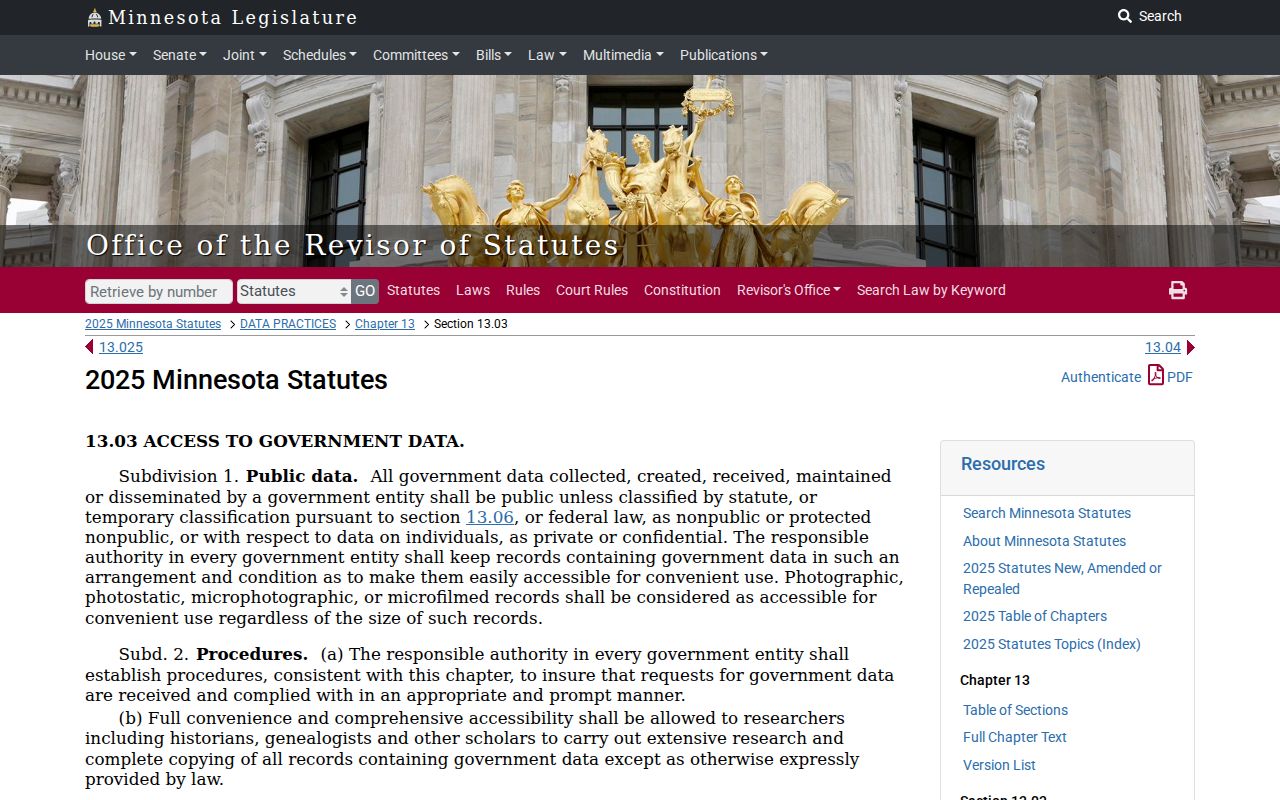 The county publishes its records policies in the Data Practices Document Center, and records questions go to the sheriff by phone or email. Keep the confirmation letter with the case number, then check again a week later.